




Growing marijuana is super exciting, but it can also be a bit tricky at times. When you're balancing all the nutrients your plant needs, sometimes things can go awry. One of the most important nutrients is nitrogen, which is responsible for growing healthy shiny leaves.
If your plant isn’t getting enough of it, you might notice it showing some worrying signs. So, what does a nitrogen deficiency in cannabis look like, and how can you fix it? Let’s dive in and learn why plants need nitrogen, signs of a deficiency, what causes it in the first place and the different ways to restore and fix a nitrogen deficiency.
Key Takeaways
- Nitrogen is classed as a primary nutrient (NPK)
- Nitrogen helps with photosynthesis, and turning sunlight into energy.
- Nitrogen transports amino acids, which are the building blocks of proteins
- Boosts the plant's immune system, making it resilient to pests and disease
- A pH issue can cause plants to become locked resulting in a deficiency.
- High nitrogen levels during early flowering can promote hemaphrodism.
- Worm castings and compost are a great slow release organic amendment
- Nitrogen deficient plants produce yellowing lower leaves
- Nitrogen deficient cause leaves to start curling or drooping
- Nitrogen deficiency will produce a red colored stem
Why do marijuana plants need nitrogen?
Nitrogen is one of the three primary nutrients alongside phosphorus and potassium and is classed as a mobile nutrient in cannabis. This means the plant can move nitrogen around, mostly from older leaves to newer growth. This is why nitrogen deficiency tends to show up first in the older, lower leaves.
So why is nitrogen so important? Well, nitrogen plays several crucial roles in cannabis growth, as highlighted below.
- Helps with photosynthesis, which is how your plant turns sunlight into energy.
- Transports amino acids, which are the building blocks of proteins for your plant.
- Boosts the plant's immune system, making it better equipped to fight off pests and disease.
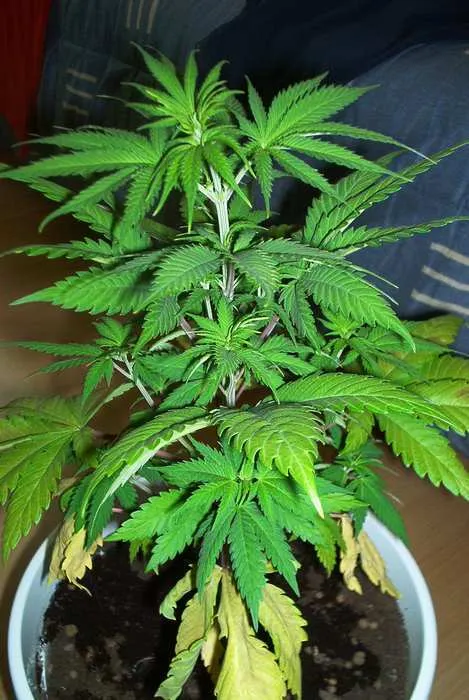
Nitrogen deficiencies will reveal themselves once it is too late, and the plants have used nitrogen from elsewhere. If you are not fully sure if your plants have a nitrogen imbalance, then check out the 5 signs below.
1. Yellowing of Lower Leaves
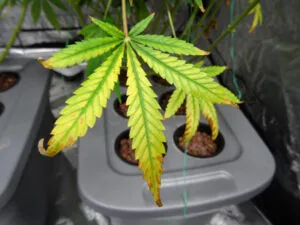
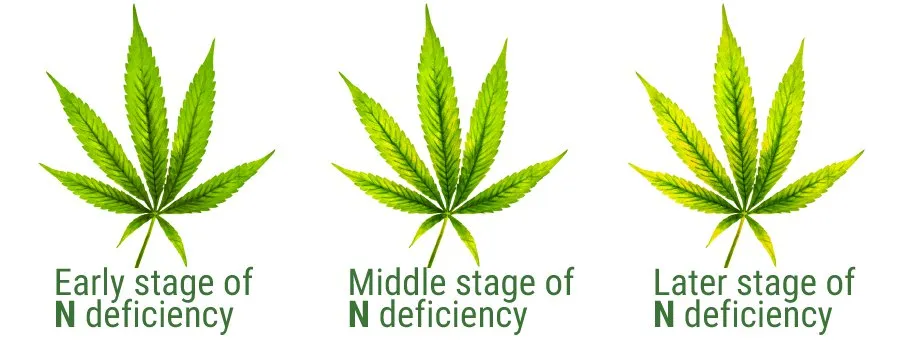
The most obvious sign is that the lower leaves of the plant turn bright yellow. This usually starts between the veins, where you might notice a pale yellow or even a little rust-brown around the edges. This is called interveinal chlorosis.
2. Curling and Drooping Leaves
As the deficiency progresses, the yellow leaves will start to curl or droop. and over time they’ll become brittle, dry and fall off. The plant might look like it’s shrinking because it can’t put energy into the lower leaves anymore.
3. Small Leaves and Stunted Growth
Another sign of nitrogen deficiency is that the plant will be smaller with little leaves. You'll notice the plant's growth slowing down, and it won’t reach the size it normally would during this stage.
4. Premature Flowering
In some cases, a nitrogen deficiency can cause the plant to flower too early, and as a result, the yield can be significantly lower than expected.
5. Red or Weak Stems
If you notice the stems turning red or take on a weak structure, it’s a sure sign the plant is dealing with a nitrogen issue. This is especially noticeable if the plant’s stems aren’t as strong as they should be.
What Causes Nitrogen Deficiency?
1. Not Enough Nitrogen
This one’s pretty straightforward: if your plant isn’t getting enough nitrogen in its food, it’s going to show signs of deficiency. This tends to happen more often in the vegetative stage when the plant is growing the most and needs plenty of nitrogen.
2. pH Imbalance (Nutrient Lockout)
Even if you’re giving your plant plenty of nitrogen, if the pH of your soil or water is off, your plant might not be able to absorb it properly. This is called nutrient lockout and means the plants will be starved off nutrients. So, it’s not just about how much nitrogen you’re giving, it’s about whether the plant can actually use it.
Actionable Tip: Ensure feeding schedules match the vegetative stage demand, when nitrogen needs are highest
How to Fix Nitrogen Deficiency in a Marijuana Plant
The good news is that nitrogen deficiency is usually easy to fix once you identify it. Here’s what to do:
1. Check and Adjust pH Levels
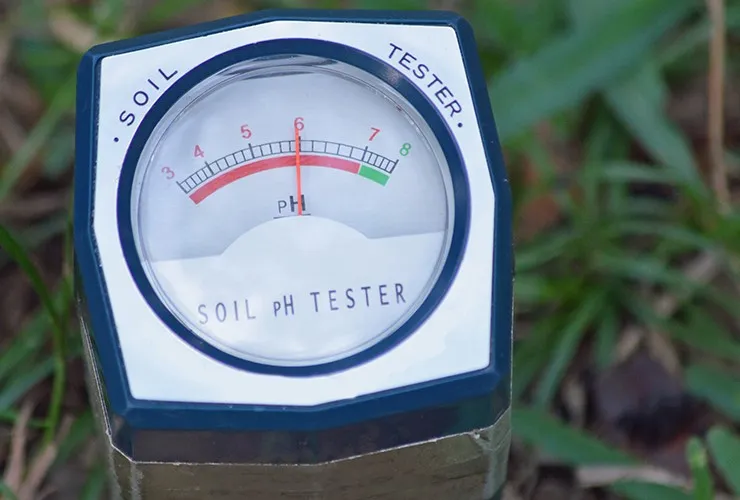
Before adding more nitrogen, the first thing you should do is check the pH level of your growing medium. If the pH is off, the plant can’t absorb nutrients properly, even if they’re present, so there is no point in adding anymore.
For hydroponics:
The ideal pH is 5.5 to 6.0 slightly acidic but not too extreme. This allows for better nutrient uptake. Use a digital pH pen to monitor the pH level of your nutrient solution.
For soil:
Aim for a slightly acidic pH of 6.0–6.5 for optimal absorption.
If the pH is off, you’ll need to correct it by adjusting the water or soil pH.
Actionable Tip: Correct pH first, as adding nutrients without fixing pH will not resolve the issue
2. Add Nitrogen-Rich Nutrients
Once the pH is in check, it’s time to give your plant the nitrogen it needs. You can use nitrogen-rich fertilizers, such as:
- Fish meal: A great organic source of nitrogen. Add 1–2 tbsp per gallon of soil.
- Blood meal: Another organic option. Use 1–1.5 tbsp per gallon of soil.
- Fish emulsion: This is a liquid source of nitrogen. Mix 1–2 tsp per gallon of water.
If you’re growing hydroponically, add 10–15 ppm nitrogen to your nutrient solution or follow the instructions on your hydroponic nutrient brand. Always check the EC using an EC pen.
3. Be Careful During Flowering Stage
During the flowering stage, you don’t want to overdo it with nitrogen. Too much nitrogen during this phase can cause nitrogen toxicity, which stunts the growth of your buds, whilst not enough will not allow all those new smaller leaves to develop.
If you suspect nitrogen deficiency during flowering, you can give a little extra, but be very careful. Less is more at this point! We recommend using worm castings added as a top dressing every 7-10 days when growing organically.
Actionable Tip: Apply nutrients cautiously, as autoflowering or flowering plants require less nitrogen
4. Organic Solutions for Nitrogen Deficiency
For those of you growing organically, there are some great options too:
- Composted manure: Works well outdoors but not ideal for indoors due to the smell.
- Fresh worm castings can be applied as a top dressing during 18/6 and 12/12.
- Bat guano: Rich in nitrogen and a good organic option for outdoor plants.
- Fish emulsion or fish meal: These can be used for indoor organic grows too.
5. Monitor and Remove Damaged Leaves
Once you’ve added the nutrients, your plant should start to recover in about 1–2 weeks. However, the yellow leaves that have already turned won’t recover, so it’s a good idea to remove them so the plant can focus on new, healthy growth. Insects are attracted to yellow so nitrogen deficient leaves need to be removed.
Quick Diagnosis: Is This Nitrogen Deficiency?
Here’s a quick checklist to help you figure out if your plant has a nitrogen deficiency:
- Yellowing lower leaves (starting between veins)
- Curling or drooping leaves
- Small leaves, stunted growth
- Red or weak stems
- Premature flowering or lower yield
If you notice most of these signs, your plant probably has a nitrogen deficiency.
Final Thoughts
Nitrogen deficiency can be a tricky issue to spot at first, but once you understand the symptoms and causes, fixing it is pretty simple. Keep an eye on your pH levels, use the right nutrients, and monitor your plant’s recovery closely.
Using slow release nutrients such as worm casting and compost is an excellent way to keep nitrogen levels well balanced and achieve optimal plant health and vigour.
Frequently Asked Questions About Nitrogen Deficiency in Cannabis Plants
How long does it take to fix nitrogen deficiency in cannabis?
Most plants recover within 1–2 weeks. New growth should appear healthy, but yellow leaves will not return to green.
What are the first signs of nitrogen deficiency?
Yellowing of older, lower leaves is usually the first sign, often followed by curling and drooping.
Can nitrogen deficiency reduce yields?
Yes. It can stunt growth and cause premature flowering, leading to lower yields.
How do I fix nitrogen deficiency quickly?
Check and correct pH first, then add nitrogen-rich nutrients such as fish emulsion or blood meal.
Can too much nitrogen be harmful?
Yes. Excess nitrogen, especially during flowering, can cause toxicity and reduce bud development.
How can I prevent nitrogen deficiency?
Maintain correct pH levels, follow a balanced feeding schedule, and adjust nutrients based on the plant’s growth stage.


