




Nutrients are one of the most important things for the growth of a cannabis plant. Just like when humans don’t get the nutrients they need, marijuana plants can become sick, affecting their development and yield potential.
There are many marijuana nutrient deficiencies so it's important to know what signs of these are. Nutrients are simply the food the marijuana plant needs during all stages of growth. And when they don’t receive it, it can have a very detrimental effect on the plant.
This article will explain what nutrients cannabis plants need, the different types and most common nutrient deficiencies, discuss nutrient lockout and toxicity, the different types of fertilizers and the importance of pH.
Key Takeaways
- Macro = nitrogen (N), phosphorus (P), and potassium (K)
- Micro = calcium, sulfur, magnesium, iron, manganese, boron, molybdenum, and zinc
- Yellowing Leaves: Can indicate nitrogen deficiency or pH imbalance.
- Brown Spots on Leaves: Often signals potassium, calcium, or magnesium deficiencies.
- Curling Leaves: May be due to overwatering, excess nitrogen, or potassium deficiency.
- Blistering or Glossy Leaves: Typically linked to magnesium deficiency.
- Mottled Yellow Leaves: Usually caused by zinc deficiency, showing up on older leaves.
- Red or Pink Coloring on Leaves: Often caused by phosphorus deficiency
- Lower Leaves Falling Off: Can indicate zinc deficiency.
- The correct pH level for organic growing is 6.0–7.0 for soil
- The correct pH level for hydroponics and coco coir is 5.5–6.5

- Key Takeaways
- What kinds of nutrients do marijuana plants need?
- Signs of Cannabis Deficiencies
- Most Common Marijuana Nutrient Deficiencies
- Nutrient Lockout
- Nutrient Toxicity
- Fertilizer Types and When to Use Them
- How to Adjust pH for Better Nutrient Absorption
- Wrap up
- Frequently Asked Questions About Marijuana Nutrient Deficiencies
What kinds of nutrients do marijuana plants need?
Marijuana plants require three main macronutrients which are nitrogen (N), phosphorus (P), and potassium (K) in large quantities. These are essential for the plant’s overall development and growth.
In addition to these macronutrients, cannabis plants also need smaller amounts of several micronutrients to function optimally. These include calcium, sulfur, magnesium, iron, manganese, boron, molybdenum, and zinc. While required in lesser quantities, micronutrients are equally critical to the plant's health.
Cannabis nutrient companies will offer micro and macro nutrients designed to be combined together, following the recommended feeding guidelines printed on the bottle.
Signs of Cannabis Deficiencies
When cannabis plants exhibit symptoms of nutrient deficiencies, it’s essential to act quickly. Deficiencies often present themselves as visible changes in the leaves, stems, and overall plant health. Below are some common deficiency symptoms that home growers will face to help you see if you have a deficiency issue.
Common Deficiency Symptoms:
- Yellowing Leaves: Can indicate nitrogen deficiency or pH imbalance.
- Brown Spots on Leaves: Often signals potassium, calcium, or magnesium deficiencies.
- Curling Leaves: May be a sign of overwatering, excess nitrogen, or potassium deficiency.
- Blistering or Glossy Leaves: Typically linked to magnesium deficiency.
- Mottled Yellow Leaves: Usually caused by zinc deficiency, showing up on older leaves.
- Red or Pink Coloring on Leaves: Often caused by phosphorus deficiency, especially in young plants.
- Lower Leaves Falling Off: Can indicate zinc deficiency.
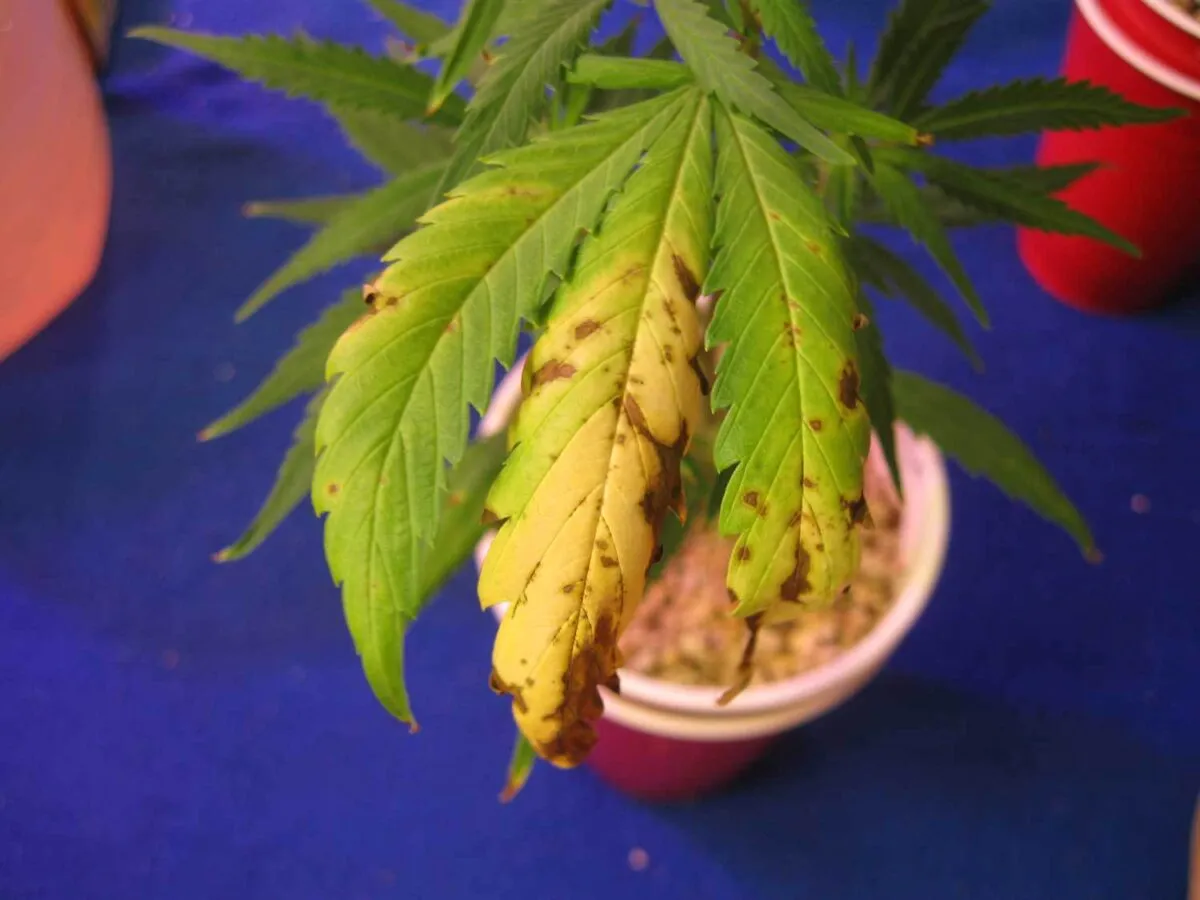
Most Common Marijuana Nutrient Deficiencies
Marijuana Nutrient Deficiency Table
| Nutrient | Deficiency Symptoms | Common Causes | Solutions |
| Nitrogen (N) | Yellowing of lower leaves, stunted growth, weak plants | Poor soil nutrition, incorrect pH, insufficient fertilizing | Use nitrogen-rich fertilizers or compost; adjust pH to 6.0-7.0 |
| Phosphorus (P) | Red or purple stems, yellowing leaves, slow growth | Low soil fertility, cool temperatures, pH imbalance | Apply phosphorus-rich fertilizers; ensure optimal soil temperature (65-75°F) |
| Potassium (K) | Yellowing or browning of leaf edges, curling leaves | Poor drainage, incorrect pH, over-fertilization | Use potassium-rich fertilizers or potash; flush with water if over-fertilized |
| Magnesium (Mg) | Yellowing between veins, curling leaf edges, weak stems | Poor drainage, pH imbalance, overwatering | Use Epsom salts (magnesium sulfate) as foliar spray or soil amendment |
| Calcium (Ca) | Yellowing, curling or brown spots on leaves, tip burn | Low pH, poor soil, high nitrogen levels | Apply CalMag supplements; adjust pH to 6.3-6.8 (soil) |
| Sulfur (S) | Yellowing of newer leaves, stunted growth | Poor soil, pH imbalance, nutrient lockout | Use sulfur-containing fertilizers or organic compost |
| Iron (Fe) | Pale leaves with dark veins, chlorosis in newer growth | High pH, poor drainage, overwatering | Apply iron chelates or foliar sprays for quick absorption |
| Zinc (Zn) | Mottled yellow leaves, deformed growth, slow development | High pH, over-fertilization, poor soil drainage | Use zinc sulfate or micronutrient mix; adjust pH to 5.8-6.5 |
| Manganese (Mn) | Yellow spots between veins, necrosis (dead tissue) | Poor soil drainage, overwatering, high pH | Use manganese sulfate or micronutrient mix; adjust pH to 5.5-6.5 |
| Boron (B) | Dead, grey shoots, dry or burnt leaf tips | Poor soil, pH imbalance, excessive watering | Apply boron-containing fertilizers; ensure proper soil drainage |
| Copper (Cu) | Dead or brown leaves, weak new growth | Poor soil, high pH, nutrient lockout | Use copper sulfate or a balanced nutrient mix |
| Molybdenum (Mo) | Yellowing leaves (middle), stunted growth | Poor soil, high pH | Apply molybdenum supplements or a balanced micronutrient mix |
Detailed Explanations of Nutrient Deficiencies
Now that you have a quick overview in the table, here’s a detailed breakdown of the most common nutrient deficiencies and their causes.
Nitrogen Deficiency:
- Symptoms: Yellowing of lower leaves, slow growth, overall weak appearance.
- Cause: Typically caused by poor soil nutrition, incorrect pH, or not fertilizing enough.
- Solution: Nitrogen-rich fertilizers or a compost and worm casting top dressing will help. Ensure the pH is between 6.0–7.0 for proper nutrient absorption.
Phosphorus Deficiency:
- Symptoms: Red or purple stems, yellow leaves, and stunted growth.
- Cause: Often due to cool temperatures, low soil fertility, or pH imbalance.
- Solution: Add phosphorus-rich fertilizers and ensure the soil temperature is around 65-75°F for optimal nutrient uptake.
Magnesium Deficiency:
- Symptoms: Yellowing between veins, curling leaf edges, and weak stems.
- Cause: Caused by poor drainage, pH imbalance, or overwatering.
- Solution: Use Epsom salts (magnesium sulfate) as a foliar spray or soil amendment. Compost is also a slow-release magnesium rich solution
Potassium Deficiency:
- Symptoms: Yellowing or browning of leaf edges, curled leaves.
- Cause: Poor drainage, incorrect pH, or over-fertilization.
- Solution: Apply potassium-rich fertilizers like potash. Ensure proper drainage and flush with water if the plant is overfed.
Calcium Deficiency:
- Symptoms: Yellowing, brown spots on leaves, and tip burn.
- Cause: Low pH, poor soil quality, or excess nitrogen.
- Solution: Use CalMag supplements and adjust the pH of your soil to 6.3-6.8.
- Symptoms: Yellowing of new leaves, stunted growth, and a general pale appearance in the plant.
- Cause: Often caused by poor soil, pH imbalance, or nutrient lockout. Sulfur is typically found in organic matter, so it can be lacking in synthetic growing mediums.
- Solution: Use sulfur-containing fertilizers or organic compost. Ensure the pH is between 6.0-7.0 in soil to allow sulfur to be absorbed.
7. Iron Deficiency
- Symptoms: Pale leaves with dark green veins (known as chlorosis) in new growth, starting at the tips and edges of younger leaves.
- Cause: High pH, poor drainage, or overwatering can prevent the plant from absorbing iron. Iron is absorbed best in slightly acidic conditions.
- Solution: Apply iron chelates or use foliar sprays for quick absorption. Adjusting pH to around 5.5–6.5 helps iron availability.
8. Zinc Deficiency
- Symptoms: Mottled yellow leaves, deformed growth, and slow plant development.
- Cause: High pH, over-fertilization, or poor soil drainage. Zinc becomes less available when pH is too high.
- Solution: Use zinc sulfate or a micronutrient mix to supply zinc. Adjust pH to 5.8-6.5 for optimal absorption.
9. Manganese Deficiency
- Symptoms: Yellow spots between leaf veins, with the edges of the leaf remaining green. In severe cases, it can lead to necrosis (dead tissue).
- Cause: Poor soil drainage, overwatering, or high pH can interfere with manganese absorption.
- Solution: Apply manganese sulfate or a micronutrient mix. Ensure the pH is between 5.5-6.5 for proper manganese uptake.
10. Boron Deficiency
- Symptoms: Dead, grey shoots, dry or burnt leaf tips, particularly noticeable in young growth.
- Cause: Poor soil, pH imbalance, or excessive watering. Boron is a micro-nutrient, and its availability can be hindered by over-watering or poor drainage.
- Solution: Use boron-containing fertilizers. Ensure your soil has proper drainage and avoid overwatering. Check the pH to ensure it is in the optimal range (around 6.0–7.0).
11. Copper Deficiency
- Symptoms: Dead or brown leaves, weak new growth, often showing a blue-grey color at the leaf tips. In some cases, buds may appear limp or weak.
- Cause: Poor soil, high pH, or nutrient lockout can cause copper to become unavailable to the plant.
- Solution: Use copper sulfate or a balanced nutrient mix. Copper is also found in some micronutrient mixes, so use those if you're growing in synthetic media.
12. Molybdenum Deficiency
- Symptoms: Yellowing of the middle leaves, often leading to stunted growth. Symptoms are similar to sulfur and nitrogen deficiencies.
- Cause: Poor soil, high pH, or a lack of molybdenum in the growing medium.
- Solution: Apply molybdenum supplements or a balanced micronutrient mix. Keep the pH of the soil in the optimal range (6.0–7.0 for soil).
13. Silicon Deficiency
- Symptoms: Weak stems and branches that may break easily, making the plant vulnerable to pests and environmental stress. Leaf curling may also occur due to insufficient structural support.
- Cause: Lack of silicon in the growing medium, especially in indoor environments. Silicon is typically present in outdoor soils, but less so in hydroponic or coco coir mediums.
- Solution: Silicon supplements (such as silica gel or potassium silicate) can be added to the water or soil. This strengthens the plant’s cell wall structure and makes it more resistant to damage.
Nutrient Lockout
Nutrient lockout occurs when the pH level of the growing medium is too high or too low, preventing your cannabis plant from absorbing essential nutrients, even if they’re available in the soil or water.
This is especially common when pH levels are outside the ideal range, causing deficiencies despite proper fertilization. For example, if your soil’s pH is too high (alkaline), your plant may be unable to absorb iron, magnesium, and other vital nutrients.
On the other hand, if the pH is too low (acidic), it can affect nutrient uptake like phosphorus and potassium. To prevent nutrient lockout, regularly test and adjust the pH of your growing medium to ensure it’s within the optimal range:
- Soil: pH 6.0–7.0
- Hydroponics and Coco Coir: pH 5.5–6.5
If lockout occurs, flushing the medium with pH-balanced water can help restore proper nutrient absorption.
Actionable Tip: If lockout is suspected, flush with pH-balanced water, then recheck the root-zone pH before resuming feeding.
Nutrient Toxicity
On the flip side of nutrient deficiencies is nutrient toxicity, which happens when you overfeed your plants. While deficiencies cause plants to lack essential nutrients, toxicity occurs when plants are exposed to excessive amounts of a nutrient.
Symptoms of toxicity can look very similar to deficiencies, making it tricky to diagnose. Common signs include leaf curling, brown tips, and dark green leaves. Nitrogen toxicity, for example, often causes dark, almost black leaves and stunted growth.
To avoid toxicity, always follow the manufacturer’s instructions for fertilizer application, and if symptoms appear, flush the soil or hydroponic system with plenty of clean water to remove excess nutrients. Be extra careful if using chemical synthetic liquid nutrients or salts and always use an EC meter or TDS pen to check the PPM of your nutrient solution.
Actionable Tip: Use an EC meter or TDS pen to check nutrient strength before feeding.
Fertilizer Types and When to Use Them
Understanding the different types of fertilizers and when to use them can significantly improve the health of your plants. Here are a few common types of fertilizers covering organic and synthetic options.
- Liquid Fertilizers: These are fast-acting and quickly provide nutrients, making them perfect for correcting deficiencies. However, they need to be applied more frequently and may wash out of the soil quicker.
- Slow-Release Fertilizers: These fertilizers release nutrients gradually over time, such as worm castings or compost, providing consistent feeding to your plants. They are ideal for preventing nutrient deficiencies and are often used in long-term setups.
- Organic Fertilizers: Made from natural sources like compost, worm castings, molasses or fish meal, these fertilizers offer slow, sustained release of nutrients while also improving soil health. They’re an excellent choice for organic growers and also keep the bacteria and fungi present well fed.
- Synthetic Fertilizers: These are manufactured and provide a more controlled and precise delivery of nutrients. They’re effective for specific nutrient applications but can be overused easily, potentially leading to toxicity. Synthetic fertilizers are suitable for hydroponic systems and coco coir.
If you are growing cannabis using organics, then why not try using liquid nutrients combined with top dressing. This will allow you to get the best of both worlds, whilst ensuring your plants have the optimal amounts of micro and macro nutrients available.
How to Adjust pH for Better Nutrient Absorption
pH is one of the most overlooked aspects of plant nutrition and one of the easiest mistakes a beginner grower can make when watering or making a nutrient solution Even if you’re providing the right nutrients, if your pH is out of balance, your plant won’t be able to absorb them properly!
For example, if the pH is too high (alkaline), your plant may struggle to absorb iron, manganese, and zinc. If it’s too low (acidic), your plant could have trouble with phosphorus and potassium. Here’s a quick guide for adjusting pH in your growing medium to ensure that your plants can access and use the nutrients with no problems at all.
- For Soil: Maintain a pH range of 6.0–7.0. If it’s too high, use pH down (phosphoric acid) to lower it. If it’s too low, use pH up (potassium hydroxide) to raise it.
- For Hydroponics/Coco Coir: Maintain a pH range of 5.5–6.5. Use pH up/down solutions to adjust the levels.
It’s essential to test the pH regularly with a pH meter or testing kit, especially if you’re using liquid fertilizers or growing in hydroponics. Ensuring that the pH is within the correct range will allow your cannabis plants to absorb nutrients efficiently and avoid deficiencies or toxicity. We recommend using a digital pH pen, as they are not expensive and will make a huge difference to how well you maintain the correct pH levels.
Actionable Tip: Adjust pH after mixing nutrients, not before, so the final solution is in range.
Wrap up
By understanding the common nutrient deficiencies and their causes, you can quickly act to correct issues before they stunt your plant’s growth. Always monitor your pH levels, provide the right nutrients, and avoid overfeeding. With care and diligence, your cannabis plants will thrive and produce healthy growth and development.
If you are not sure how much to feed the plants, then refer to the nutrient brands feeding chart or recommended ml/L dose rate. Remember less is more sometimes, and especially when growing high grade cup winning buds!
Frequently Asked Questions About Marijuana Nutrient Deficiencies
What is the most common nutrient deficiency in marijuana plants?
Nitrogen deficiency is one of the most common, often showing as yellowing on older, lower leaves.
Can the wrong pH cause nutrient deficiencies in cannabis?
Yes. If the pH is too high or too low, the plant may not be able to absorb nutrients properly, even if they are present.
What is nutrient lockout in cannabis plants?
Nutrient lockout happens when the pH of the growing medium is outside the ideal range, preventing the roots from taking up available nutrients.
How do I know if my cannabis plant has a deficiency or a toxicity?
Deficiencies and toxicities can look similar, but toxicity often shows as very dark leaves, burnt tips, or clawing after overfeeding.
What pH should I maintain to avoid nutrient problems?
For soil, aim for 6.0–7.0. For hydroponics and coco coir, aim for 5.5–6.5.
What should I do first if I suspect a nutrient problem?
Start by checking pH and reviewing your feeding strength before adding more nutrients.


