




If you have ever looked at your lush green leaves, and noticed a formation of brown spots, you may be wondering why it has happened, if it is nutrient-related or a sign of insect damage
Brown spots on cannabis leaves are usually a sign that something isn’t quite right in your grow. In most cases, they’re caused by nutrient deficiencies, incorrect pH levels, pests, disease, or environmental stress.
The key to fixing the problem is identifying the cause early. While brown spots can look similar across different issues, where they appear on the plant,and how they develop,can tell you exactly what’s going wrong.
In this guide, we’ll break down the most common causes of brown spots on cannabis leaves, how to tell them apart, and what you can do to fix them quickly and prevent them from coming back.
Key Takeaways
- Calcium deficiency is the most common cause of brown spots on the leaves
- Potassium deficiency is another common reason for brown spots to appear
- Nitrogen-deficient plants will produce yellow leaves that develop brown spots
- A low pH level below 6 in your soil or growing medium can cause brown spots
- Light burn causes brown spots due to excessive high-intensity light exposure
- Leaf Septoria is a fungal disease that causes brown or yellow spots
- Root rot can cause brown spots on cannabis leaves
- thrips, leaf miners, broad mites, fungus gnats cause brown spots on leaves
- Nutrient lock out happens when the pH is too low or high for nutrient absorption
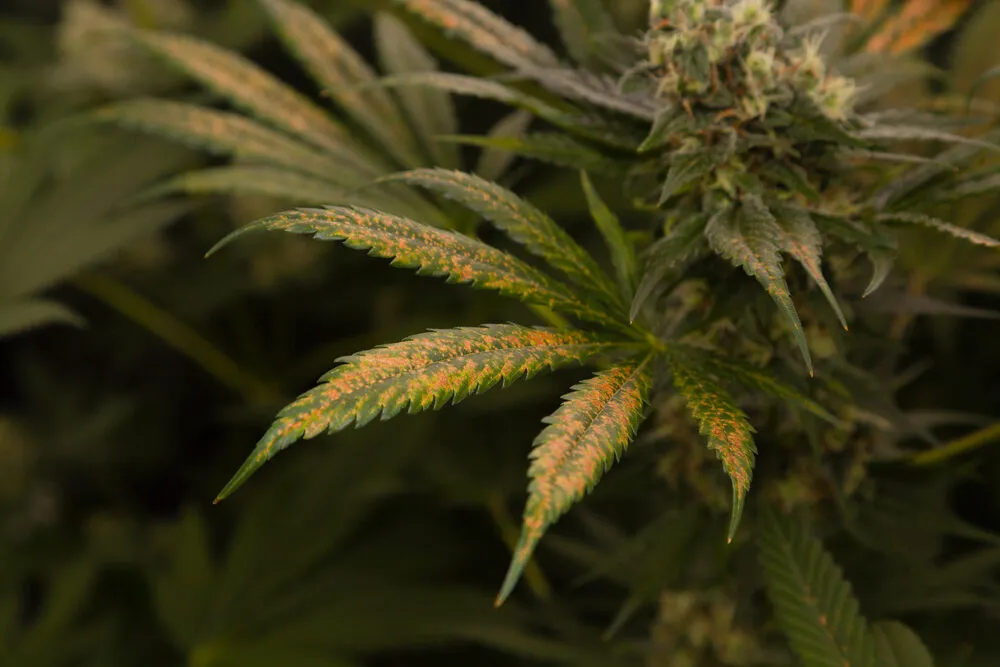
Quick Diagnosis: Brown Spots On Cannabis Leaves
Use this quick checklist to narrow down the cause before diving into full fixes. You will soon be able to see what the root cause of the problem may be and how to avoid it from happening again
- Spots on new growth (top of plant)
Likely calcium deficiency - Spots starting on older/lower leaves
Likely potassium or nitrogen deficiency - Leaf edges turning brown and crispy
Likely potassium deficiency - Yellowing first, then brown dead spots
Likely nitrogen deficiency - Spots with yellow halos or spreading pattern
Possible Leaf Septoria (fungal disease) - Only top leaves affected (closest to light)
Likely light burn - Spots combined with drooping, slow growth, and wet soil
Possible root rot or overwatering - Spots with visible pests or leaf damage (tiny holes, trails, specks)
Likely pests such as thrips or mites - Multiple symptoms with no clear pattern
Likely pH imbalance (nutrient lockout)
Actionable Tip: Use where the spots appear (top vs lower leaves) to quickly narrow down the root cause before applying any treatment.
Brown Spot Types Diagnosis Table
| Cause | Where it Appears First | What It Looks Like | Key Clue |
|---|---|---|---|
| Calcium deficiency | New growth (top leaves) | Brown or rust spots, curled edges | Common in coco or when pH is off |
| Potassium deficiency | Older leaves | Brown edges, crispy margins | Leaf edges “burn” first |
| Nitrogen deficiency | Lower leaves | Yellowing first, then brown spots and leaf drop | Whole plant may look pale |
| pH imbalance (lockout) | Anywhere | Mixed symptoms, including spots and yellowing | Nutrients present but not absorbed |
| Light burn | Top canopy | Brown patches with bleaching | Closest leaves to the light affected |
| Leaf Septoria | Lower leaves first | Round brown or yellow spots that spread | Looks like a spreading disease |
| Root rot / overwatering | Whole plant | Brown spots with drooping and slow growth | Soil stays wet, roots struggle |
| Pests (thrips, mites, etc.) | Random areas | Spots, speckling, surface damage | Check underside of leaves |
Possible causes for brown spots on cannabis leaves
Brown spots on cannabis leaves can worry even the most experienced grower. These spots indicate underlying issues that need addressing to ensure your plant’s health. Common causes include nutrient deficiencies, pests, disease, and environmental stress. Identifying the specific cause is key to finding the right solution and to give you the peace of mind you want.
Calcium deficiency
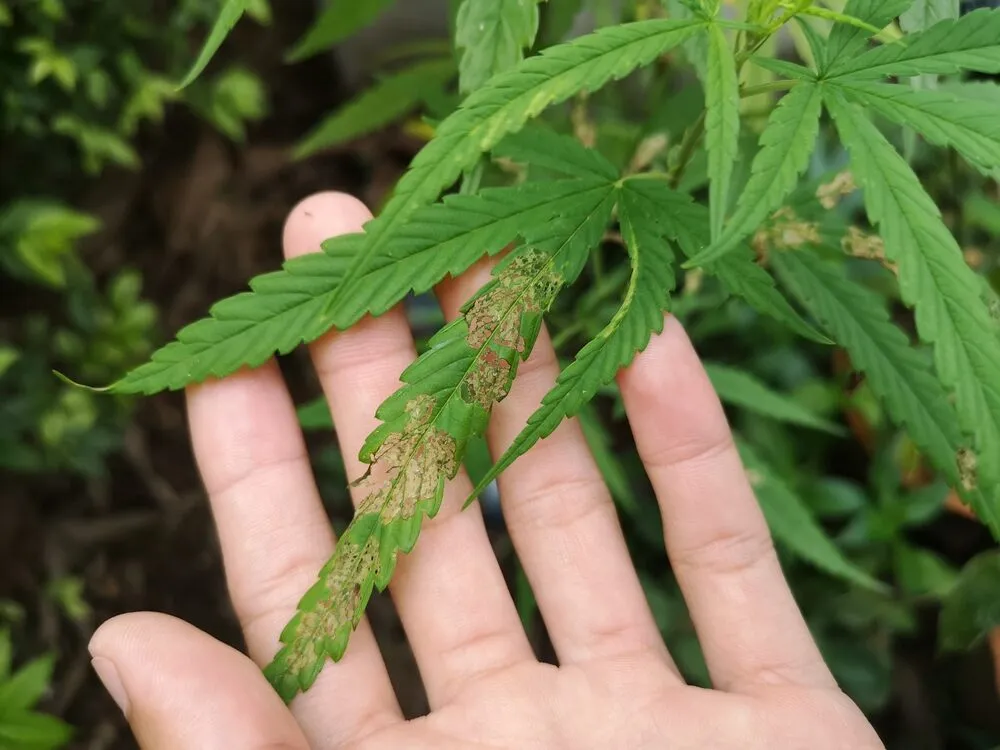
Calcium deficiency is probably the most common cause of brown spots on cannabis leaves. Calcium is essential for cell wall structure and growth, in the same way it is essential for strong bones and teeth
When cannabis plants lack calcium, new growth shows brown, crispy spots, usually accompanied by discolored and curled leaf edges. This deficiency usually stems from the incorrect soil pH blocking the uptake of the available calcium in the growing medium or inadequate nutrient supply.
How to fix Calcium deficiency:
The first step to sort out a calcium deficiency is to adjust your soil's pH to 6.2-7.0 (6-6.5 for hydro setups), as this range optimizes calcium absorption in cannabis. Then use a calcium-magnesium supplement or add dolomite lime to your soil to ensure that there is plenty available for your plant to use.
Once you have the correct pH range in your grow medium, regularly monitor your plants to maintain balanced nutrient levels and prevent future problems. As your plants get bigger, they may start to need more calcium than before, so pay close attention to your plants.
Actionable Tip: Keep your pH within the correct range (6.2–7.0 in soil) to ensure calcium can be absorbed properly.
Potassium deficiency
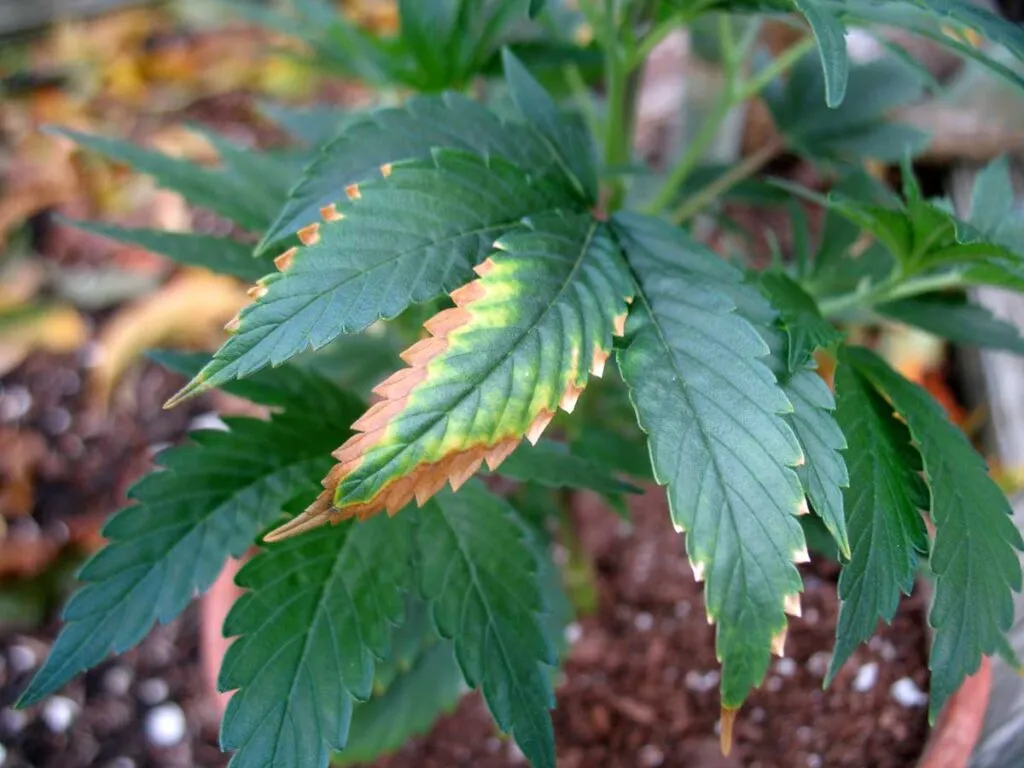
Potassium deficiency is another common reason for why cannabis leaves start to show brown patches. Potassium is vital for various plant functions, including water uptake and photosynthesis.
When a cannabis plant doesn’t get enough potassium, you’ll notice brown or yellowing of leaves or spots appearing on the older leaves. In addition, leaf edges turn brown and crispy, and the stems themselves can become weak and scrawny. This will be more common during the flowering and stages of bud development and maturity.
How to fix Potassium deficiencies:
To fix a potassium deficiency in your plants, use a high-quality potassium-rich fertilizer. Most nutrient companies will list the ratio of nutrients as N-P-K, the letter K representing Potassium (confusing, isn’t it!). The higher the potassium ratio the better.
Ensure your soil or growing medium has adequate drainage, as waterlogged conditions can hinder potassium uptake. Check and adjust your soil’s pH to stay within the range of 6.0-7.0, as this is the optimum range for nutrient uptake, particularly Potassium.
Actionable Tip: Use a potassium-rich feed and ensure proper drainage to prevent nutrient uptake issues.
Nitrogen deficiency
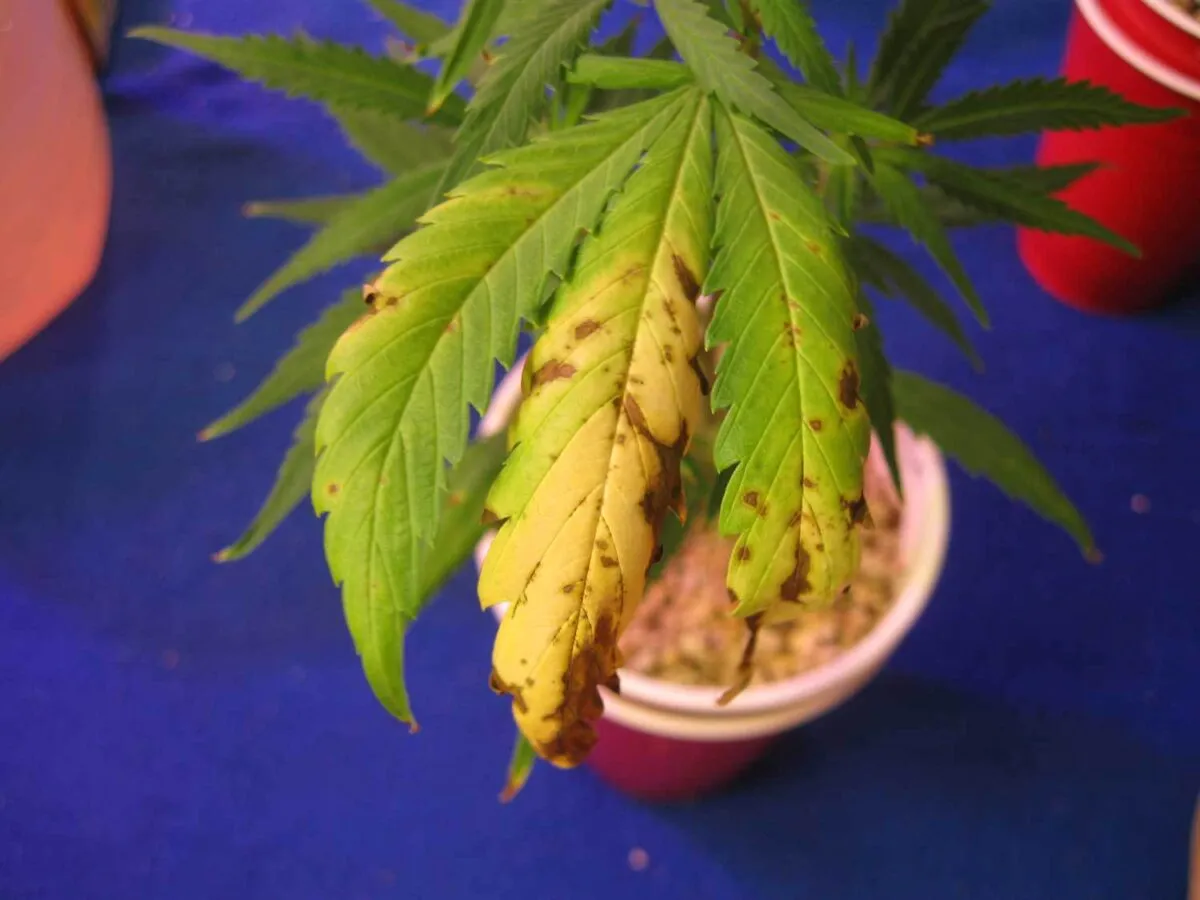
Nitrogen is the most important element in chlorophyll production, the green coloring in leaves that allows photosynthesis, and overall plant growth. When cannabis plants lack nitrogen, older leaves turn yellow, particularly the ones nearer the base of the plant.
If the deficiency becomes serious the yellowed leaves will develop brown spots, eventually becoming dry and brittle the falling off the plant. Nitrogen deficiency will also lead to stunted plants and significantly worse yield. It is advised to throw away any yellow leaves to prevent insects and pests.
How to fix Nitrogen deficiency:
Resolving a nitrogen deficiency is quite simple. Firstly, check the pH of your soil and make sure it is in the 6.0-7.0 range. Then increase the availability of Nitrogen in your soil by adding a nitrogen rich fertilizer or feed.
Regularly check your plants’ pH and maintain a consistent feeding schedule to prevent future nitrogen related problems occurring. Do not over do it with nitrogen as it can cause plants to hermaphrodite if the levels are too high.
Actionable Tip: Maintain a consistent feeding schedule and monitor pH to prevent nitrogen depletion in the soil.
pH too low
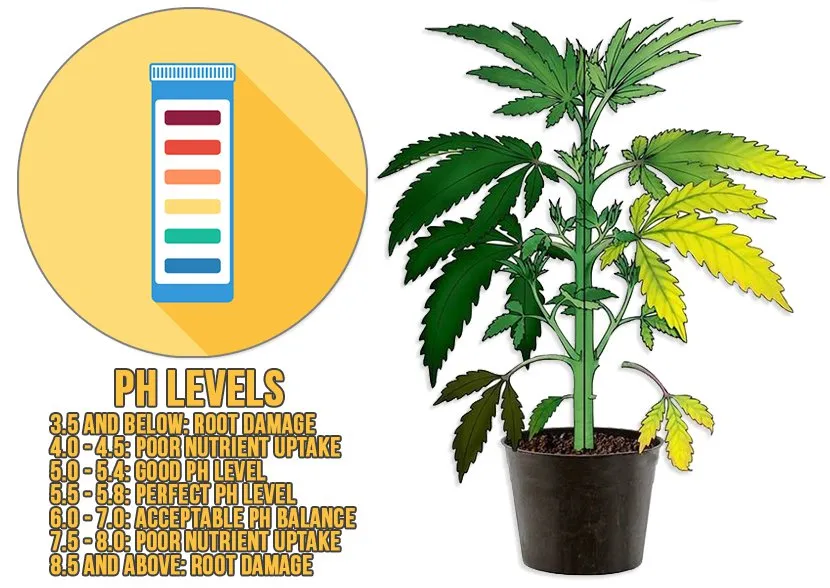
A low pH level (below 6) in your soil or growing medium can cause brown spots on cannabis leaves. When the pH is too low, some nutrient uptake becomes difficult or impossible for the plant. This will lead to poor growth and damage to existing leaves and stems. Symptoms of low pH include brown spots, yellowing leaves, and stunted overall growth.
How to fix your pH level:
If your pH is too low, test your soil or runoff water pH using a reliable pH meter. If the pH is below the optimal range of 6.0-7.0, add a pH up solution or dolomite lime to raise the pH level.
Regularly monitoring the pH and adjusting it to stay within this range is critical to ensure your plants can access the nutrients they need. With the pH sorted, maintain a balanced nutrient regimen to support healthy growth.
You will only need to adjust the pH of your nutrient solution at the end of mixing together. It is recommended to add drops of pH up or down to make life easy. pH level (below 6) in your soil or growing medium can cause brown spots on cannabis leaves. When the pH is too low, some nutrient uptake becomes difficult or impossible for the plant. This will lead to poor growth and damage to existing leaves and stems. Symptoms of low pH include brown spots, yellowing leaves, and stunted overall growth.
How to fix your pH level:
If your pH is too low, test your soil or runoff water pH using a reliable pH meter. If the pH is below the optimal range of 6.0-7.0, add a pH up solution or dolomite lime to raise the pH level. Regularly monitoring the pH and adjusting it to stay within this range is critical to ensure your plants can access the nutrients they need. With the pH sorted, maintain a balanced nutrient regimen to support healthy growth.
Light burn
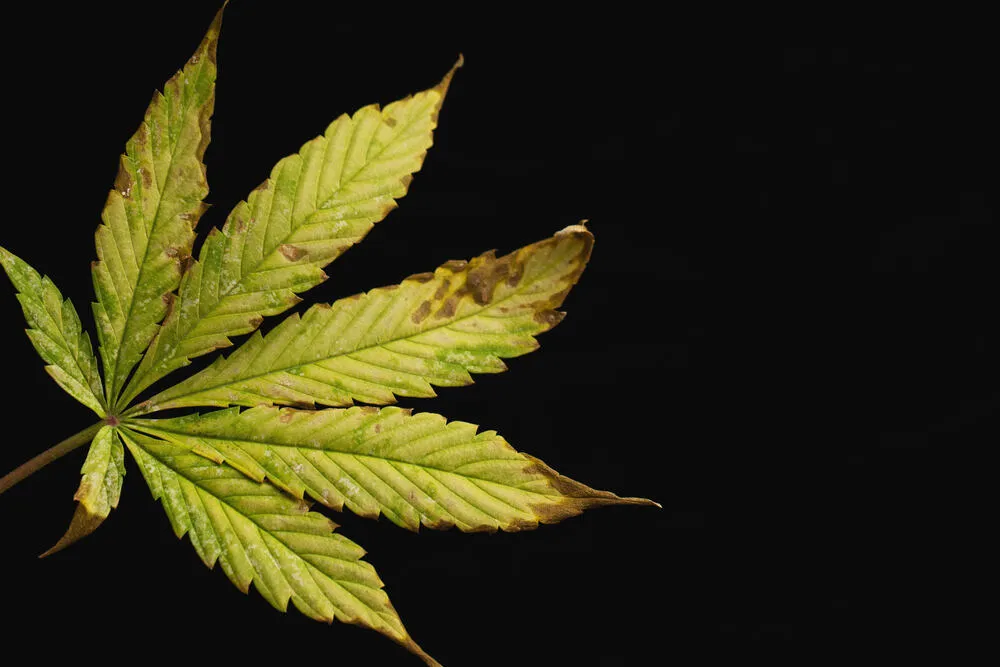
Light burn is a condition where cannabis leaves develop brown spots due to excessive high-intensity light exposure. When plants are too close to powerful grow lights, the intense light can damage the leaves, and even bleach buds white!
This can also happen if indoor grow spaces use poorly fitted reflective surfaces, such as aluminium foil or Mylar that is wrinkled. This can focus light and heat energy into spots on the plant, burning them. Light burn is often accompanied by bleached or yellowing leaves at the top of the plant.
How to fix light burn:
To fix light burn related issues, adjust the distance between your grow lights and the cannabis canopy, ensuring the lights are at a safe distance. Make sure you follow the manufacturer's recommendations for light placement; they will know what they are doing! During the seedling and vegetation stage, it is recommended to keep the grow lights 24-36 inches away, and then lower to 24 inches during 12/2.
If necessary, use a light meter to measure the intensity and adjust accordingly. This way you can see the exact levels of photosynthetically active radiation (PAR). Ensure that any reflective surfaces are smooth giving an even reflection of your grow lights. Gradually acclimatize your plants to stronger light levels, and regularly inspect them to prevent future light burn.
Leaf Septoria
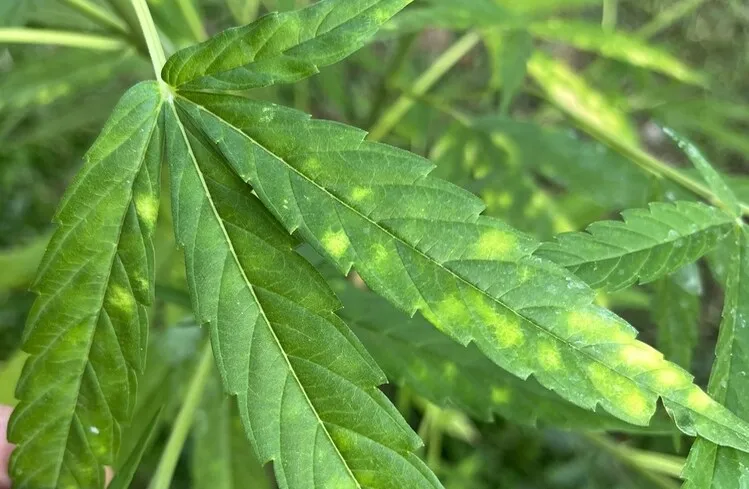
Leaf Septoria is a fungal disease that causes brown or yellow spots on cannabis leaves. This disease thrives in warm, humid conditions and can quickly spread, causing the leaves to drop off. Spotting the signs of Septoria early and dealing with it fully are key to avoiding extensive damage to your crop.
How to fix Leaf Septoria:
To fix Leaf Septoria, remove and dispose of affected leaves immediately to prevent the spread of the fungus. Improve air circulation around your plants by pruning excess foliage and spacing plants adequately.
Use a fungicide specifically designed for cannabis to treat the remaining leaves. Maintain a clean growing environment collecting any fallen material or spills, reduce humidity levels, and avoid overhead watering, focusing on the soil surface instead to prevent future outbreaks.
Root issues such as root rot
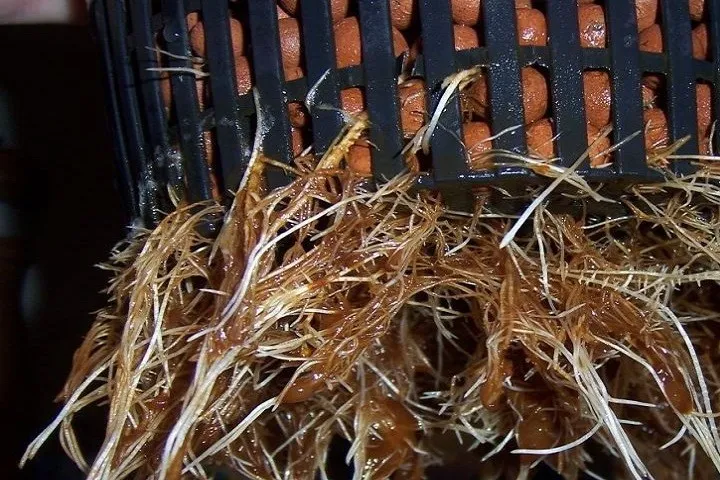
Root issues, particularly root rot, can cause brown spots on cannabis leaves. Root rot occurs when roots are waterlogged for a long period of time and unable to get enough oxygen. This leads to harmful bacteria, fungal growth and decay in the roots and the leaves. Symptoms include brown spots, yellowing leaves, and an overall wilted appearance.
How to fix root issues:
If you have root rot, first ensure proper drainage in your growing medium and avoid overwatering your plants as this is very common for many growers. Next remove the affected plant from its pot and trim away any diseased roots.
Repot the plant in fresh, well-draining soil or medium, and consider adding perlite for drainage and beneficial microbes or a root treatment solution to promote healthy root growth. Adjust your watering schedule to allow the soil to dry out slightly between waterings and prevent future root issues.
Pests including thrips, leaf miners, broad mites, fungus gnats, and plant hoppers
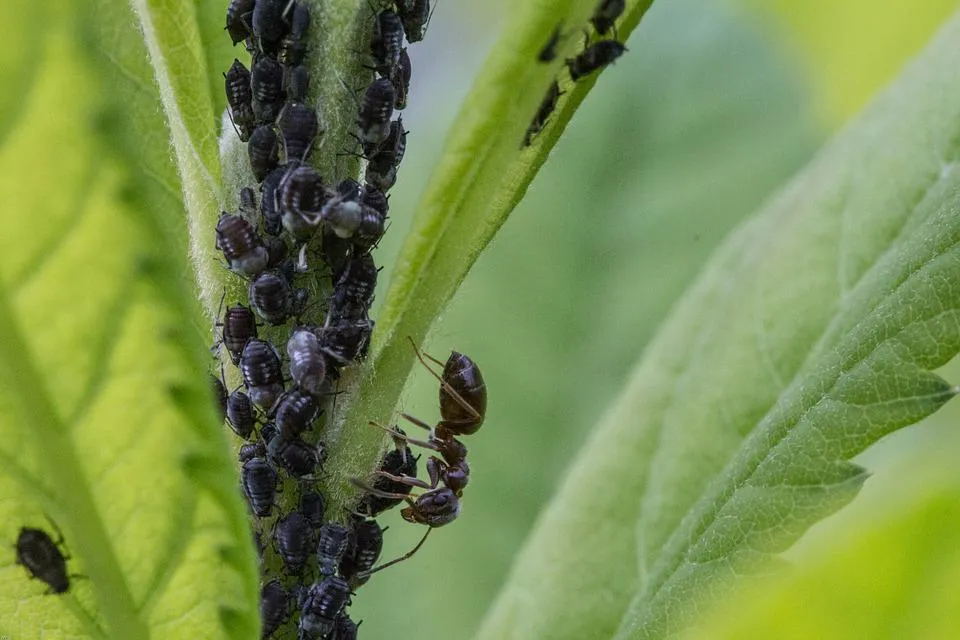
Cannabis pests such as thrips, leaf miners, broad mites, fungus gnats, and plant hoppers can very often cause brown spots on cannabis leaves. These pests damage the plant by feeding on the leaves, sucking sap and even eating the surface layers of the plant, leading to visible spots, discoloration, and overall plant stress.
How to deal with pests:
To control and resolve pest issues, identify the specific pest affecting your plants and use appropriate treatments. For thrips and leaf miners, apply insecticidal soap or neem oil. Broad mites can be controlled with miticides.
Use sticky traps and beneficial nematodes to combat fungus gnats. For plant hoppers, remove them manually and use organic insecticides. It is essential to maintain a clean growing environment and introduce beneficial insects like ladybugs to naturally control pest populations.
If you are using a spray as a deterrent, then be careful not to spray the buds during the flowering period. Spray the tops and undersides of the leaves and check them every day for signs of new damage or larvae
Actionable Tip: Inspect plants daily and treat infestations early using neem oil, beneficial insects, or targeted solutions
FAQs
Are brown spots on cannabis leaves always a nutrient deficiency?
No, not always. While nutrient deficiencies like calcium or potassium are common causes, brown spots can also result from pH imbalance (nutrient lockout), pests, fungal diseases like Leaf Septoria, or environmental stress such as light burn. It’s important to look at where the spots appear and how they develop before deciding on a fix.
Can brown spots on cannabis leaves go away?
No, the damaged parts of the leaf will not recover once brown spots have formed. However, if you fix the underlying issue, new growth should come in healthy and free of spots. The goal is to stop the problem from spreading, not to reverse existing damage.
Should I remove leaves with brown spots?
It depends on how severe the damage is. If only a small portion of the leaf is affected, it’s usually best to leave it, as the plant can still use it for photosynthesis. If the leaf is heavily damaged or diseased (such as with Leaf Septoria), it’s better to remove it to prevent the issue from spreading.
How do I know if brown spots are caused by pests or pH issues?
Check your plant closely. If you see signs of insects like tiny moving dots, holes, or silvery trails on the leaves, pests are likely the cause. If there are no visible pests and multiple symptoms appear across the plant (yellowing, spots, slow growth), the issue is more likely related to pH imbalance causing nutrient lockout.
What is the fastest way to fix brown spots on cannabis leaves?
The fastest way is to identify the root cause and correct it immediately. Start by checking your pH levels, as this is one of the most common issues. Then review your feeding schedule, inspect for pests, and assess your environment (light, temperature, watering). Once corrected, healthy new growth should appear within a few days to a week.


