




Low stress training, or LST training, is a simple way to shape cannabis plants by gently bending and securing stems as they grow. Instead of letting one main stem dominate, growers use LST cannabis techniques to create a wider, more even canopy and improve light exposure across more of the plant.
In this LST training step-by-step guide, we’ll explain when to start low stress training, how to bend and tie cannabis plants safely, how long to continue training, and the most common mistakes to avoid. We’ll also show how low stress training cannabis plants differs from topping and how the timing changes between autoflowers and photoperiod plants.
If you are new to plant training, this guide will take you through the process in a clear, practical order so you can understand what to do, when to do it, and how to avoid damaging healthy growth.
Key Takeaways
- LST training uses gentle bending and tying to shape cannabis plants without cutting the main stem.
- Start low stress training when the plant is healthy, established, and still flexible rather than relying on plant age alone.
- Make small adjustments over time instead of trying to force stems into position in one session.
- Check and reposition ties regularly as branches grow and stems thicken to avoid restricting or damaging the plant.
- The goal is a wider, more even canopy that spreads growth across the available space and improves light access to more branches.
- What Is Low Stress Training?
- The LST Tie-Down Technique
- Does LST Training Increase Yield?
- Is It Better to Top or LST Cannabis Plants?
- When Should You Start LST Training?
- How Long Should You LST Train For?
- What Do You Need for LST Training?
- LST Training Step by Step
- Common LST Mistakes and How to Fix Them
- Can Beginners Do LST Training?
- Conclusion
- Frequently Asked Questions
What Is Low Stress Training?
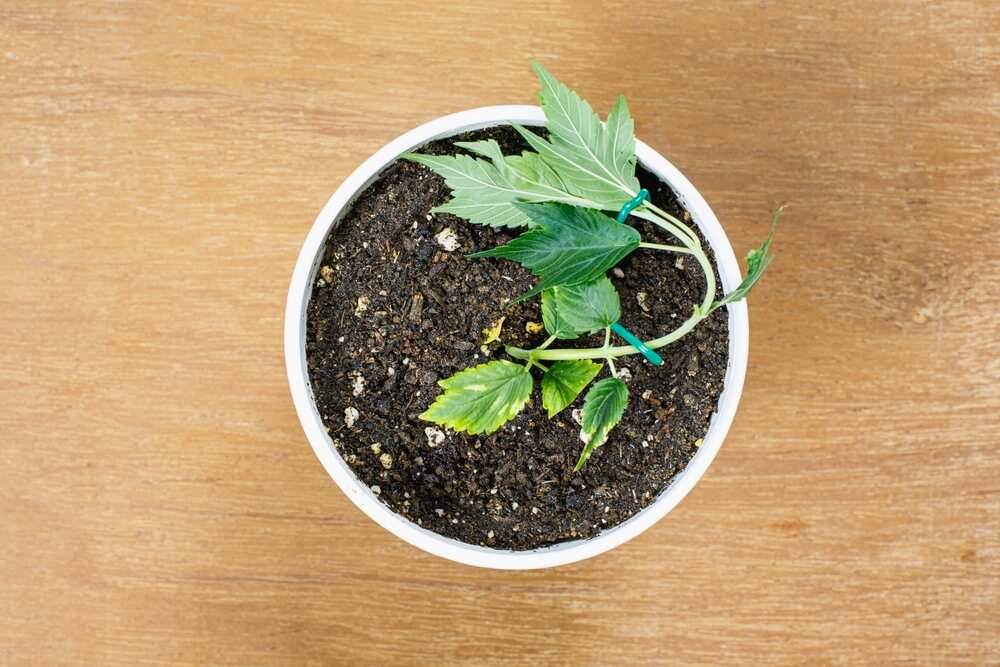
Low stress training (LST) is a cannabis training method that changes how a plant grows without cutting or removing the main growing tip. Instead, growers gently bend the main stem and side branches outward, then hold them in position with soft plant ties.
The aim is to turn a naturally upright plant into a wider, flatter canopy. This gives more branches access to useful light instead of allowing one main stem to dominate the top of the plant. LST can be used indoors to make better use of limited grow space and outdoors to control height and spread growth more evenly.
Unlike high-stress training methods such as topping cannabis plants, LST does not involve cutting off the main growing tip or deliberately damaging healthy stems. This usually means less recovery time when the plant is trained gradually and correctly.
How Does LST Work on Cannabis Plants?
When the main stem is gently bent away from its upright position, lower branches receive more direct light. These side shoots then begin growing upward toward the light, helping create several tops at a similar height rather than one dominant central stem.
As the plant develops, growers can continue repositioning fast-growing branches into open areas of the canopy.
Grower tip: Make small adjustments over time. If a stem feels stiff or needs force to move, do not try to bend it into position in one session.
What Is Apical Dominance?
Apical dominance describes a plant's natural tendency to put more growth into its highest main shoot.
Cannabis plants commonly develop this upright, tree-like shape when they are left untrained. By lowering the main growing tip with LST, side branches are no longer positioned as far below it. They can receive more light and compete more evenly for upward growth.
LST does not completely remove apical dominance in the same way as cutting off the main tip. Instead, it allows the grower to manage the plant's natural growth pattern gradually while keeping the main stem intact.
The LST Tie-Down Technique
The tie-down technique is one of the simplest ways to use low stress training on cannabis plants. It involves gently bending the main stem and later the side branches, then securing them in place with soft plant ties.
This is the main LST method covered in this guide because it is easy to adjust as the plant grows and does not require cutting healthy growth.
How Tying Down Cannabis Changes Plant Growth
An untrained cannabis plant naturally puts most of its height into the main growing tip. By lowering that tallest point and securing it away from the center of the plant, more light can reach the branches below.
Those side branches then begin growing upward toward the light. As they develop, growers can gradually spread them into open areas around the pot, helping the plant grow wider instead of concentrating most of its growth vertically.
Grower tip: Do not try to create the final shape in one session. Small adjustments every few days are easier on flexible stems and give you more control over the canopy.
Why an Even Canopy Matters
A more level canopy helps distribute available light across more of the plant rather than concentrating it on one tall central shoot. This can reduce heavily shaded lower growth and make the plant easier to manage.
Spacing branches apart can also improve airflow through the canopy, which is especially useful indoors where plants are often grown close together.
The goal is not to make every branch exactly the same height. Aim for a balanced canopy where the main growing sites have good access to light and space.
Does LST Training Increase Yield?
LST training can improve the yield potential of a cannabis plant by creating a wider, more even canopy. Instead of allowing one main stem to dominate the available light, low stress training spreads growth across several branches, helping more bud sites receive useful light.
However, LST does not guarantee a larger harvest. It is a canopy-management technique, and the final yield still depends on the overall growing conditions and health of the plant.
What Affects the Results of LST?
The results of LST can vary depending on several factors:
- Genetics: Some strains respond to training and branching better than others.
- Plant health: Healthy, actively growing plants are better able to respond to training.
- Lighting: Good intensity and coverage are needed to make use of the wider canopy.
- Growing space: Plants need enough horizontal room to spread.
- Vegetative time: Photoperiod plants given longer to develop can usually be trained more extensively.
- Canopy management: Regularly adjusting ties helps prevent one branch from becoming dominant again.
Grower tip: Think of LST as a way to use your available light and growing space more efficiently, rather than as a guaranteed method for increasing yield.
Is It Better to Top or LST Cannabis Plants?
Neither method is automatically better. The right choice depends on the plant, the grower's experience, and how much recovery time is available.
LST is the gentler option because the stems are bent and secured rather than cut. Topping creates a stronger change in plant structure but also causes more stress.
What Is Topping?
Topping is a high-stress training technique that involves removing the main growing tip above a node. This interrupts the plant's natural upward growth and encourages the shoots below the cut to become more dominant.
Photoperiod plants usually give growers more time to recover from topping because the vegetative stage can be extended indoors. Autoflowers have a shorter growth cycle, so topping requires more caution and good timing.
LST vs Topping: Key Differences
| Factor | LST | Topping |
| Method | Bend and secure stems | Remove the main growing tip |
| Plant stress | Low | Higher |
| Recovery | Usually limited when done gently | Requires recovery from cutting |
| Autoflowers | Common option | Requires more caution |
| Photoperiods | Suitable | Suitable |
| Main goal | Spread and level the canopy | Create additional dominant shoots |
| Can the techniques be combined? | Yes | Yes |
Grower tip: If you are new to plant training, LST is usually the easier place to start because you can make gradual adjustments without removing healthy growth.
When Should You Start LST Training?
The best time to start LST training is when the plant is established enough to handle bending but the main stem is still flexible.
Avoid relying on plant age alone. Two cannabis plants of the same age can develop at very different rates depending on genetics, lighting, root growth, temperature, and other growing conditions.
Instead, judge the plant by its structure and overall health.
How to Tell When a Cannabis Plant Is Ready for LST
A plant is usually ready for low stress training when it has:
- Several established nodes.
- Healthy, active new growth.
- A main stem that bends without feeling woody or rigid.
- A strong enough root system to hold the plant securely in the pot.
- No obvious signs of major stress, wilting, nutrient problems, or recent damage.
Grower tip: Gently test the flexibility of the upper stem before tying it down. If it resists strongly or feels brittle, do not force the bend.
When to Start LST on Autoflowers
If you're growing autoflower cannabis seeds, the shorter vegetative period gives you less time to shape the plant before flowering begins.
Begin training while the plant is still young, healthy, and actively developing, but only once it is properly established. Our guide to low stress training autoflowers covers the shorter training window in more detail. Use gentle bends and make small adjustments over several days rather than trying to flatten the plant in one session.
If an autoflower is already stressed or showing signs of stunted growth, allow it to recover before adding further training.
When to Start LST on Photoperiod Plants
Photoperiod plants usually give growers more flexibility because they can remain under a vegetative cannabis light schedule for longer before the grower switches the plant into flowering.
This provides more time to bend the main stem, spread side branches, and reshape the canopy as new growth develops.
Training can continue throughout vegetative growth while the stems remain flexible and the plant is healthy.
| Plant Type | When to Start | What to Look For | Main Consideration |
| Autoflower | Early in healthy vegetative growth | Established nodes, flexible stem, active growth | Shorter training window |
| Photoperiod | Once established in vegetative growth | Strong roots, healthy growth, flexible stems | More time available to shape the canopy |
The exact starting point will vary from plant to plant, so use stem flexibility and plant health as your main guide rather than following a fixed day or week.
How Long Should You LST Train For?
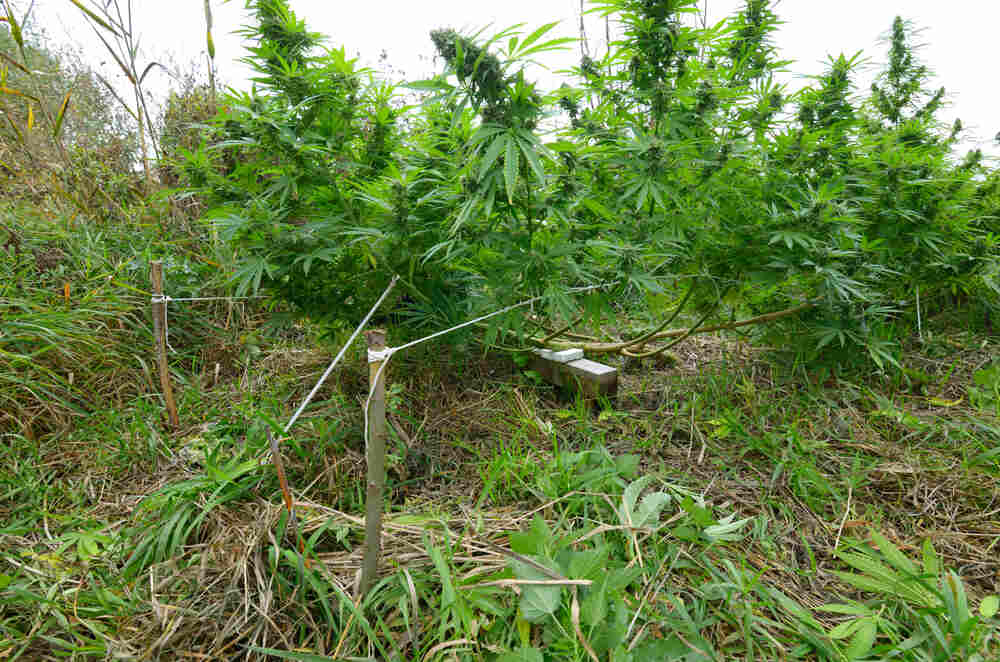
LST is an ongoing process rather than a single bend. As the cannabis plant grows, new branches can rise above the canopy and existing ties may need to be moved. Most active training takes place during vegetative growth, while stems are still flexible and easy to reposition.
How Often Should You Adjust LST Ties?
Check the plant every few days during active growth. Fast-growing branches may need to be pulled into open areas, while slower branches can be left to catch up.
Also check that ties are not pressing into thickening stems. Loosen or reposition them before they leave deep marks or restrict growth.
Grower tip: Focus on maintaining a balanced canopy rather than constantly adjusting every branch. If the plant is already growing evenly, leave it alone.
Should You Continue LST During Flowering?
Gentle LST can continue during the early flowering stretch if branches are still flexible. This can help control branches that grow taller than the rest of the canopy.
Avoid making aggressive new bends once stems become firmer and flowers are developing. At this stage, the risk of splitting or damaging branches increases.
When Should You Stop LST Training?
Stop active LST once the flowering stretch has slowed, the main structure is established, and stems are becoming stiff.
After this point, focus on supporting the existing canopy rather than reshaping the plant. You can still check ties and make minor adjustments if needed, but major bending should be finished.
What Do You Need for LST Training?
LST does not require much equipment, but using the right materials makes it easier to train branches without damaging them.
| Tool | What It Is Used For |
| Soft plant ties | Securing stems without cutting into them |
| Fabric-coated garden wire | Holding branches in position while allowing some flexibility |
| Pot with anchor points | Gives you secure places to attach ties around the rim |
| Plant stakes | Adds support where branches need extra control |
| Plant-safe tape | Helps support minor accidental stem splits |
| Clean scissors | Used for trimming ties or making anchor holes where needed |
What Should You Avoid Using for LST?
Avoid anything thin, sharp, or rigid enough to cut into a growing stem. This includes thin string, fishing line, bare wire, and cable ties pulled too tightly.
Stems continue to thicken as the plant grows, so even a tie that looks safe at first can become restrictive later.
Grower tip: Use soft, wide ties and leave a little room around the stem. Check them regularly and loosen or reposition anything that starts pressing into the plant.
LST Training Step by Step
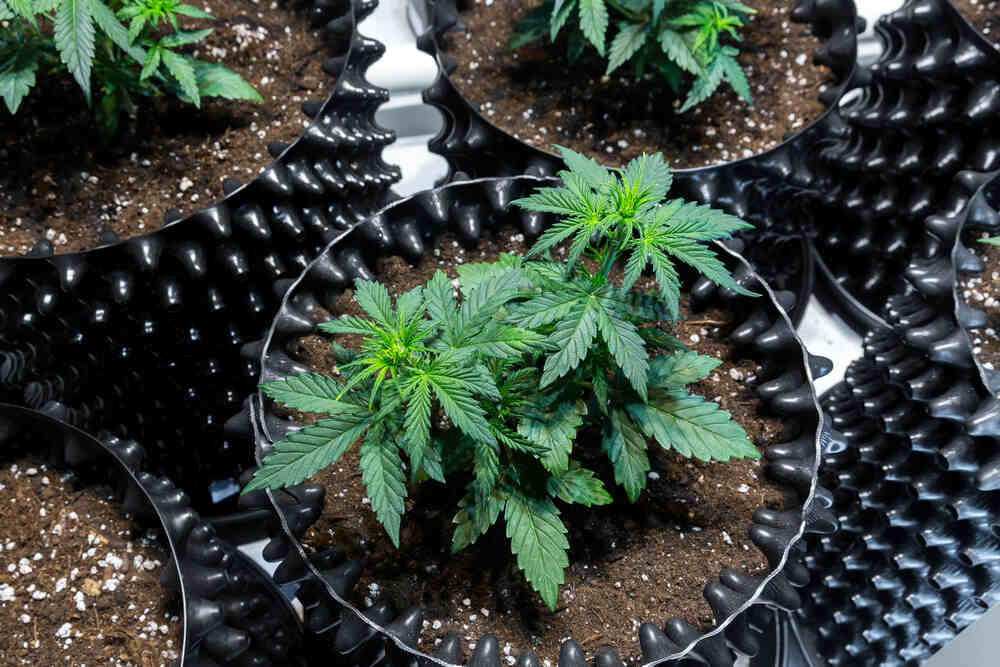
Low stress training works best when you approach it as a gradual shaping process, not a one-time bend. The goal is to guide the plant into a wider, flatter canopy while keeping stress low and avoiding damage. Start slowly, watch how the plant responds, and make small corrections as new growth develops.
Step 1: Check the Plant Is Healthy and Ready
Before you start, make sure the plant is actively growing and strong enough to handle training. Look for several established nodes, healthy new growth, and a main stem that still feels flexible rather than stiff or woody.
Do not start LST on a wilted or damaged plant, or one showing clear signs of a cannabis nutrient deficiency. Recently transplanted plants should also be given time to settle before training begins. If the plant is already struggling because of overwatering or underwatering, root stress, heat, or a nutrient imbalance, correct the problem before adding further training.
Grower tip: If you need noticeable force to bend the stem, do not force it. Wait and train newer, more flexible growth instead.
Step 2: Prepare the Pot and Anchor Points
Next, set up the points where your ties will attach. Your anchor points will depend on the type of pot you're growing cannabis in. With plastic pots, make small holes around the rim for the ties. Fabric pots often allow soft ties to be attached directly through the upper edge.
It helps to create several anchor points around the container, not just one. As the plant spreads, you will need different positions to pull branches outward and keep the canopy balanced.
Step 3: Add a Counter-Anchor to the Main Stem
Before bending the top of the plant, secure the lower part of the stem with a counter-anchor. Place a soft tie near the base of the main stem and pull it gently in the opposite direction to the bend you are about to make.
This step is easy to overlook, but it is important. Without a counter-anchor, the whole plant can lean in one direction, pulling the lower stem and root ball sideways instead of bending the upper growth where you want it.
Step 4: Gently Bend the Main Stem
Support the stem with your fingers close to the area you are bending. Then slowly guide the upper part of the main stem outward toward the edge of the pot. Aim for a controlled outward bend rather than trying to force the plant flat straight away.
Make the first adjustment gentle. If the stem starts to crease too much or feels too stiff, stop and try again later rather than pushing further.
Grower tip: Several small adjustments are safer than one aggressive bend.
Step 5: Secure the Main Stem With a Soft Tie
Once the stem is in position, attach it to an anchor point using a soft plant tie or coated garden wire. The tie should hold the stem securely, but it should not be tight around the plant itself.
Always leave some room for the stem to thicken as it grows. A tie that is too tight can dig into the stem and restrict growth over time.
Step 6: Train the Side Branches
Over the next several days, the side shoots will begin turning upward toward the light. As they develop, guide them outward into unused canopy space so the plant spreads evenly instead of bunching up in one area.
Try to prevent branches from crossing over each other or stacking too closely together. The aim is to create several strong tops at a similar height, with enough space between them for light and airflow.
Step 7: Check and Adjust the Ties as the Plant Grows
LST does not end after the first bend. As the plant grows, ties will need regular checking and repositioning. Look at the plant every few days and make small adjustments as needed.
Move ties farther along growing branches, loosen anything pressing into the stem, and lower any branch that starts rising well above the rest of the canopy. At the same time, give slower branches a chance to catch up.
The goal is not a perfect shape. It is a relatively even canopy with well-spaced growth and good light access across the plant.
LST Training Diagram: Where to Bend and Tie Cannabis
A good LST training diagram should clearly label the key points of the process so beginners can follow each step visually.
Your diagram should show:
- Main stem
- Lower counter-anchor
- First bend
- Main soft tie
- Pot anchor point
- Side branches
- Direction of future training
- Desired canopy shape
A simple overhead or angled diagram works best because it shows how the main stem is pulled sideways, how side branches fill the open space, and how the final canopy should look once training is underway.
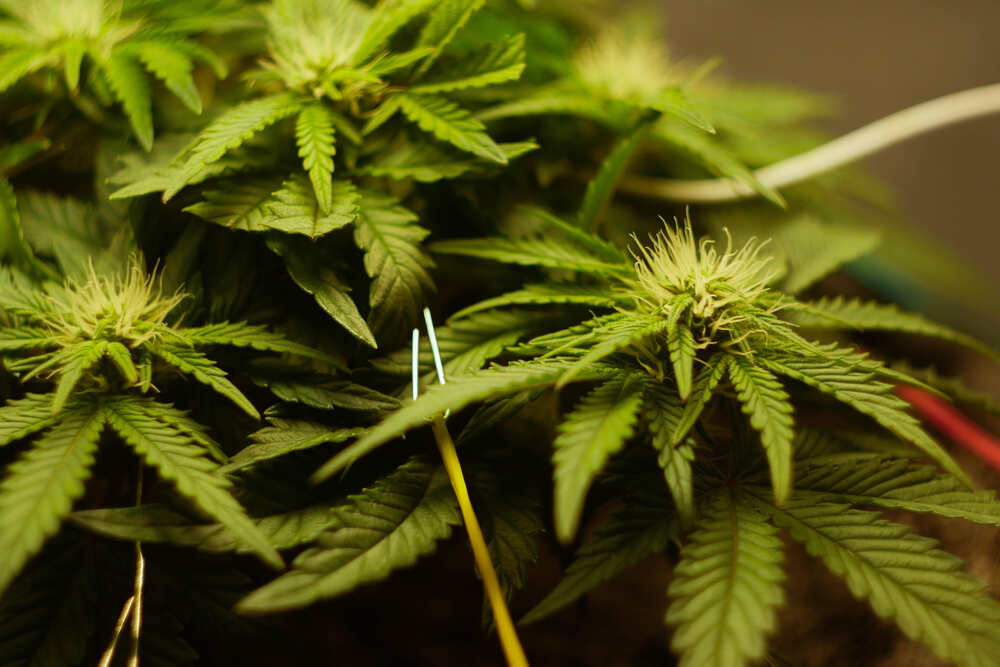
Common LST Mistakes and How to Fix Them
Most LST problems can be corrected if you notice them early. The key is to stop adding more stress, identify what went wrong, and only continue training once the plant is growing normally again.
Starting LST Too Early
Very young seedlings may not have enough root development to stay stable when the stem is pulled sideways.
How to fix it:
- Remove or loosen the training tie.
- Return the stem to a more natural position.
- Allow the plant to establish stronger roots and several healthy nodes.
- Restart LST only when the plant is actively growing and securely rooted.
Waiting Until the Stem Is Too Stiff
Older stems become thicker and harder to bend without splitting.
How to fix it:
- Stop if the stem resists the bend.
- Do not try to force it into position.
- Look for younger, more flexible growth higher up the plant.
- Train those branches instead of the rigid section.
Bending the Plant Too Far at Once
A sharp or aggressive bend can crease or split the stem.
How to fix it:
- Release some tension from the tie.
- Allow the stem to return slightly toward its original position.
- Leave it to adjust before applying more pressure.
- Continue with smaller bends over several days.
Grower tip: If you feel strong resistance, stop. LST should guide the stem rather than force it.
Using Ties That Cut Into the Stem
Thin or tight ties can dig into stems as they expand.
How to fix it:
- Remove or loosen the restrictive tie.
- Check the stem for damaged or compressed tissue.
- Replace it with a wider, softer plant tie.
- Leave enough room for the stem to continue thickening.
Forgetting to Adjust the Ties
A correctly positioned tie can become restrictive as the branch grows.
How to fix it:
- Check every tie every few days.
- Loosen any tie beginning to press into the stem.
- Move the tie farther along the branch if needed.
- Re-secure it without pulling the branch tighter than necessary.
Training a Stressed or Unhealthy Plant
LST should not be added to a plant already struggling with watering, temperature, nutrients, or root problems.
How to fix it:
- Pause all training.
- Identify the underlying problem.
- Correct the growing conditions.
- Wait until healthy new growth resumes.
- Restart LST gradually rather than immediately applying the previous amount of tension.
What to Do If You Snap a Stem or Branch
Minor splits can sometimes recover if the damaged area is supported quickly.
Step 1: Stop bending the damaged branch immediately.
Step 2: Gently return the split sections to their natural position without pulling them apart further.
Step 3: Support the damaged area with plant-safe tape or a small splint if extra support is needed.
Step 4: Remove tension from any nearby LST ties.
Step 5: Leave the branch alone while it recovers and monitor it for wilting or further splitting.
Step 6: Only resume training once the damaged area has stabilised and the branch is showing healthy growth again.
| Problem | Possible Cause | First Action |
| Stem begins splitting | Bend was too aggressive | Release the bend and support the damaged area |
| Tie marks appear | Tie is too tight | Loosen or replace the tie |
| Plant base moves sideways | No counter-anchor | Support and secure the lower stem |
| Branch feels rigid | Growth is too mature | Stop bending and train younger growth |
| Growth slows noticeably | Plant may be stressed | Pause LST and identify the underlying cause |
Can Beginners Do LST Training?
Yes. LST is one of the more beginner-friendly cannabis training methods because it relies on gently bending and securing stems rather than cutting the plant.
That said, plant health should come first. Before attempting LST, growers should already have the basics under control, including watering, lighting, grow room humidity, temperature, and nutrition. A healthy plant is much easier to train and more likely to respond well to gradual adjustments.
If the plant is wilted, growing slowly, or showing signs of stress, deal with that problem before starting or continuing LST.
Conclusion
LST training is a simple way to shape cannabis plants into a wider, more balanced canopy. It works best when plants are healthy, stems are still flexible, and each adjustment is made gradually rather than forced.
The aim of low stress training is not to flatten every branch. It is to guide dominant shoots into open space, improve light exposure across the canopy, and help lower branches grow more evenly.
Check ties regularly and leave enough room for stems to thicken as the plant develops. Major bending should stop once the structure is established and branches become harder to move safely.
For beginners, start with one gentle bend and watch how the plant responds before making further adjustments. With regular checks and careful positioning, LST can become a straightforward way to manage plant height, shape, and canopy development indoors or outdoors.
Frequently Asked Questions
Can You Use LST on Outdoor Cannabis Plants?
Yes. LST can be used on outdoor cannabis plants to control height, spread branches across a wider area, and help prevent one central shoot from becoming much taller than the rest of the plant.
Outdoor plants can become large, so make sure ties and anchor points are secure enough to hold developing branches without cutting into them. Wind and weather also mean outdoor ties should be checked regularly.
Do You Need a Special Pot for LST Training?
No. Most containers can be used for LST as long as you have somewhere secure to attach the ties.
Plastic pots can have small holes made around the upper rim, while fabric pots often allow soft ties to be attached directly through the edge. Plant stakes can also provide extra anchor points where needed.
When Can You Remove LST Ties?
You can remove a tie when the branch holds the desired position without springing back significantly or when the tie is no longer needed to maintain the canopy.
Remove or reposition ties sooner if they start pressing into the stem. Some branches may need support for longer than others, so check each tie individually rather than removing them all at once.
How Do You Know If LST Is Working?
A successfully trained plant should gradually develop a wider canopy with several branches growing upward at a similar height.
You should also see side shoots becoming more exposed instead of remaining heavily shaded beneath one tall main stem. If one branch begins growing much faster than the others, it can be gently repositioned to keep the canopy balanced.
Can You Use LST With a ScrOG Net?
Yes. LST and ScrOG can work together because both techniques aim to spread growth across a wider, more even canopy. If you're growing autos, our guide to SCROG autoflowers explains how to combine gentle branch training with a screen.
Growers can use LST early to position the main stem and side branches, then guide new growth through or beneath the screen as the plant develops. The net provides additional support and helps keep branches spread across the available growing area.


